How to Teach Close Reading in 7 Simple Steps
If you are wondering how to teach close reading and how to get students to annotate in a way that supports their reading comprehension, these 7 steps will help you build a routine your students can actually follow.
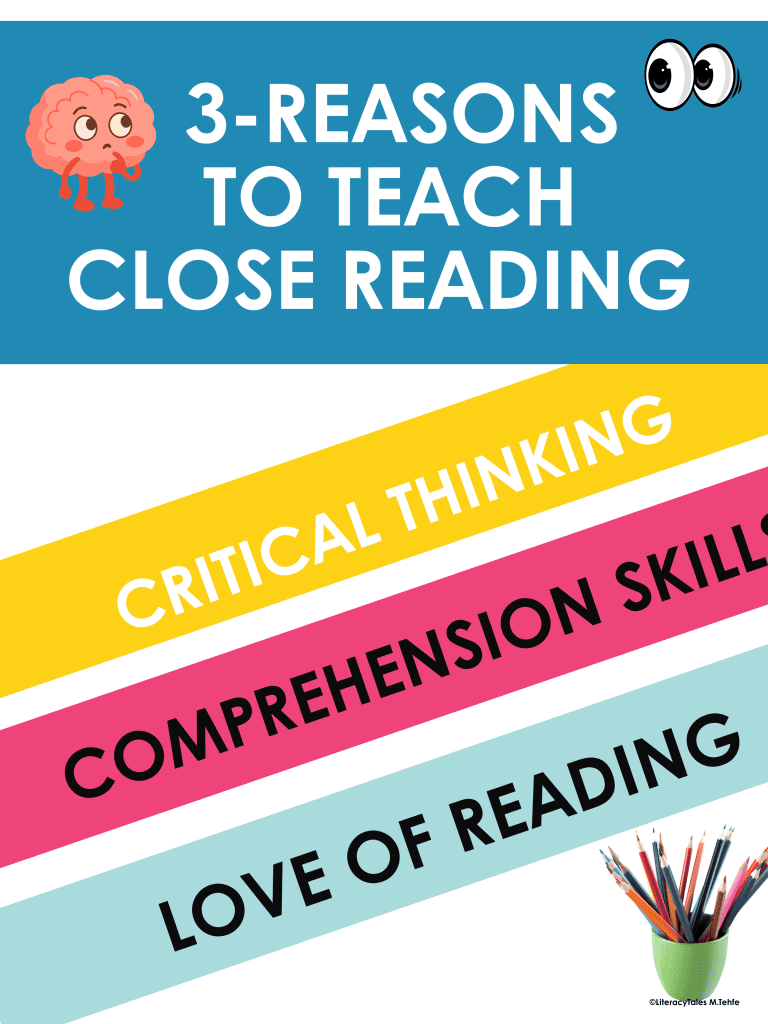
Close reading helps students slow down, reread with purpose, notice important details, and support their thinking with text evidence.
Teaching close reading does not have to feel overwhelming. When students know what to look for, and teachers follow a consistent routine, close reading becomes a powerful and manageable part of reading instruction.
This close reading strategy helps students slow down, reread with purpose, notice important details, and support their thinking with text evidence. It is not just another test-prep strategy. When it is taught well, close reading helps students become stronger readers, better thinkers, and more confident writers.
Sign Up to Receive A Free Close Reading Roadmap for a Perfect Reading Lesson
What is Close Reading & Close Reading Strategy
Close reading is a reading strategy that teaches students to read a text carefully more than once.
Each read has a purpose. Students might reread to understand the main idea, notice vocabulary, find evidence, analyze the author’s choices, or explain what the text means.
In upper elementary, close reading helps students move beyond “I read it” to “I can explain it with evidence.”
How to Teach Close Reading
Here is a simple close reading routine you can use with fiction or nonfiction.
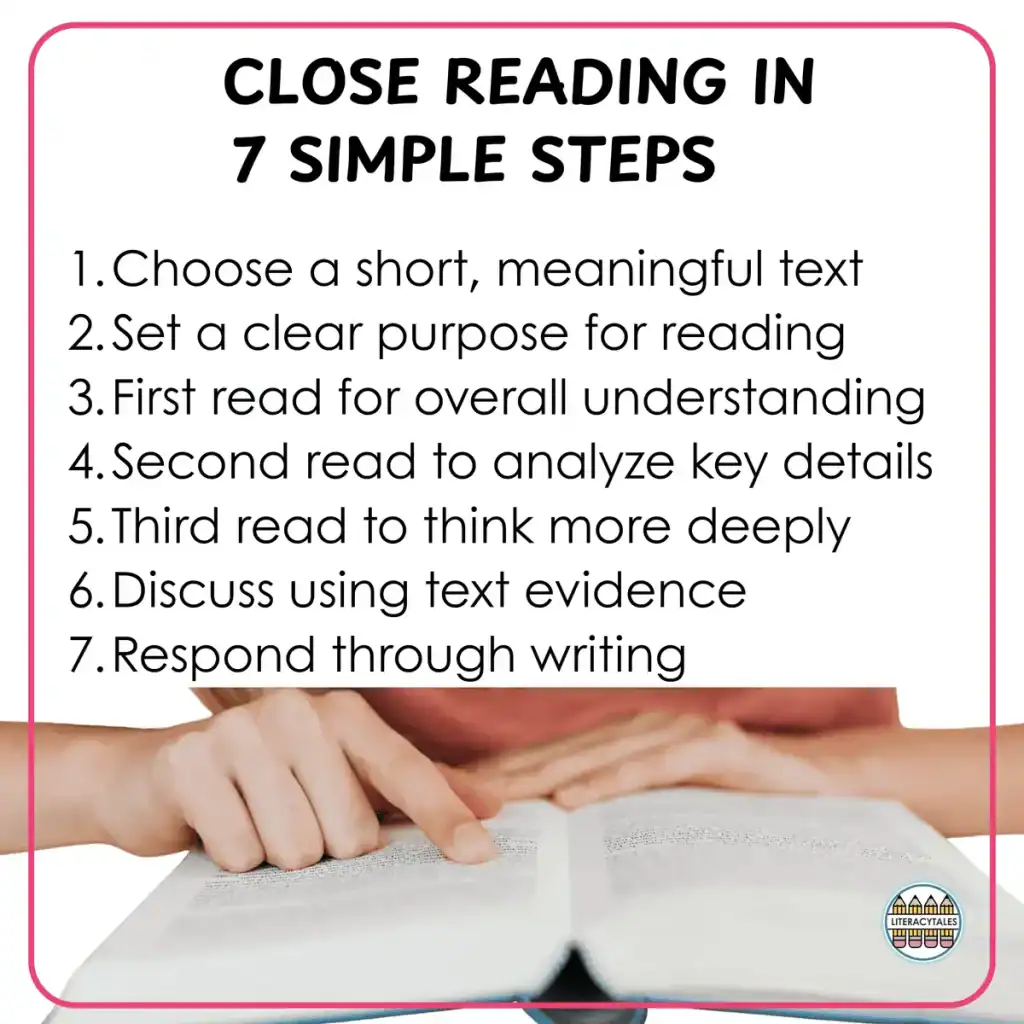
1. Choose a Short Text
Close reading works best with a short text that is worth rereading. You do not need a long passage.
Look for a text with important vocabulary, strong details, a clear central idea or theme, and evidence students can discuss.
For grade 3, keep the text short and clear. For grade 4, choose texts with deeper details and stronger vocabulary. For grade 5, use texts that require students to analyze word choice, point of view, theme, or central idea.
2. Set a Clear Purpose
Before students read, tell them what to look for.
You might say:
“Today we are reading to find details that show how the character changes.”
“Today we are reading to figure out the central idea.”
“Today we are reading to notice how the author’s word choice affects the mood.”
A clear purpose keeps students focused. They are not just reading to finish. They are reading to think.
3. Read Once for the Gist
I like to keep the first read simple because students need time to understand the text before we ask them to analyze it. During the first read, students should focus on understanding the text.
Keep it simple. No heavy annotation yet.
Ask:
- What is this text mostly about?
- Who or what is the text focused on?
- What happened?
- What did you notice?
This first read gives students the basic understanding they need before they dig deeper.
If your students struggle with this first read, my post on six steps to help students become active readers walks through how to build that habit before close reading even starts.
4. Reread for Key Details
The second read is where close reading really begins.
Students go back to the text to find details that matter. They might look for repeated words, character actions, important facts, clues for an inference, or details that support the central idea.
This is one of the most important close-reading techniques because it teaches students to return to the text rather than guess.
Model your thinking as you read:
“I notice the author says the character’s hands were shaking. That detail helps me understand how nervous she feels.”
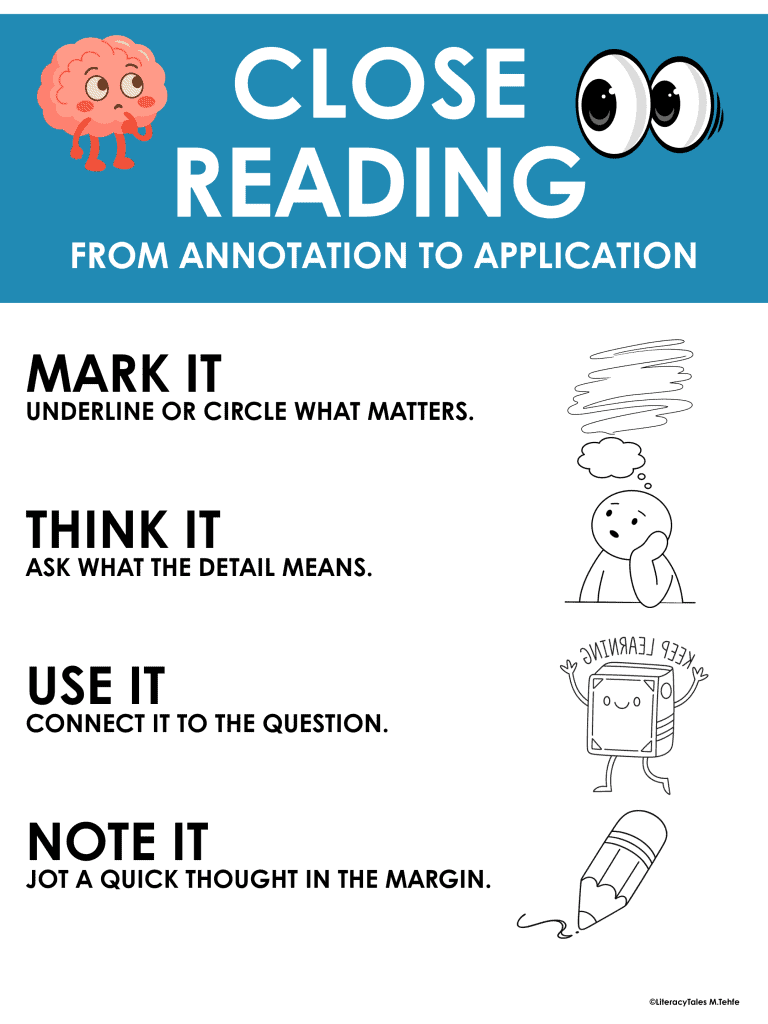
5. Annotate What Matters
Annotations should have a purpose. Students need to mark it, think about it, use it, and jot a quick note so the marks actually help them understand the text. It should not become a coloring activity.
Give students a simple system:
- underline key details
- circle important vocabulary
- star evidence
- write a question mark beside confusing parts
The goal is not to mark everything. The goal is to mark the parts that connect to the reading purpose.
6. Discuss the Text Using Evidence
After students reread and annotate, give them time to talk.
Use partner talk, small groups, or a whole-class discussion. Sentence stems help students stay focused on the text.
Try:
- I noticed _____ because the text says _____.
- I think _____ because _____.
- One detail that supports my thinking is _____.
- I agree because _____.
- I want to add on because _____.
This is where students hear other ideas, return to the text, and learn to explain their thinking.
If you want a strategy that pairs naturally with this discussion step, the TAGS reading strategy is the one that moved my own students’ benchmark scores.
7. Respond Through Writing
The final step is a written response.
Students can write a short response, complete a graphic organizer, answer a text-evidence question, or write in a reading notebook.
A strong response should include:
- a clear answer
- evidence from the text
- an explanation
Example:
“The character is nervous about the competition. The text says her hands were shaking before she walked on stage. This shows she feels worried about what might happen.”
This step also gives you quick information about who understands the text and who needs more support.
What Close Reading Looks Like in Grades 3–5
Close reading can follow the same routine across grades, but the support should vary.
In grade 3, use shorter texts, clear questions, sentence frames, and lots of modeling.
In grade 4, ask students to connect details, explain evidence, and think about central idea, theme, and vocabulary.
In grade 5, push students to analyze the author’s purpose, point of view, tone, word choice, and how details develop a theme or central idea.
Common Close Reading Mistakes
Close reading works best when it is focused and simple.
Watch out for these common mistakes:
- choosing a text that is too long
- asking students to annotate everything
- skipping the first read
- asking questions students can answer without the text
- treating close reading like test prep only
Close reading can support test prep, but it is really about reading comprehension. Students are learning how to read carefully, think deeply, and explain their ideas with evidence.
Close Reading Questions to Use
Use questions that send students back to the text.
For fiction:
- What does the character want?
- What details show how the character feels?
- How does the character change?
- What lesson or theme is developing?
- What evidence supports your thinking?
For nonfiction:
- What is the central idea?
- Which details support the central idea?
- What is the author trying to explain?
- How does the text structure help the reader?
- What evidence helps you understand the topic?
Want a simple way to plan your next close reading lesson?
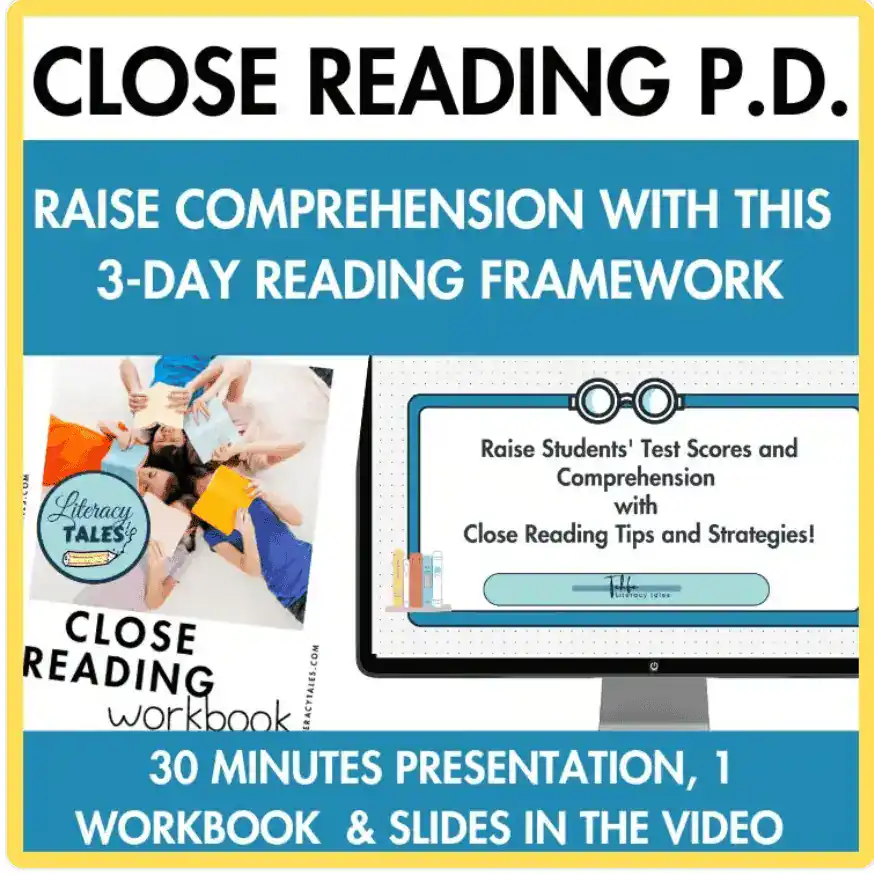
Looking to simplify planning and save time? The Close Read Teacher Training PD Workbook supports this routine and gives teachers a structured way to plan close reading lessons.
- Step-by-step reading and writing lesson plans
- Low-prep, engaging worksheets
- Built-in assessment tools for tracking progress
- Writing prompts and vocabulary activities
- Do Now activities, close reading passages, writing responses, and vocabulary practice
Close Reading = Structure + Routine + Meaningful Instruction
Close reading works when it is structured, purposeful, and consistent. A clear routine helps students become confident readers who think deeply, write clearly, and understand what they read.
Close reading is not just test prep. It is a pathway to comprehension, critical thinking, and lifelong reading success.
Try a Free Close Reading Resource
Want a simple way to plan your next close reading lesson?
Grab the free close reading roadmap and use it to plan your text, reading purpose, annotation focus, discussion questions, and written response.
It gives you the structure before you teach, so you are not trying to figure it out in the middle of the lesson.
Frequently Asked Questions
What is a close reading strategy?
A close reading strategy helps students reread with purpose, notice key details, and explain their thinking with text evidence.
What are close reading techniques?
Close reading techniques include setting a purpose, rereading, annotating, discussing the text, and writing with evidence.
How many times should students read during close reading?
Usually more than once. The first read is for understanding, and the next read is for details, vocabulary, inference, or evidence.
What should students annotate?
Students should annotate key vocabulary, important details, confusing parts, repeated ideas, and text evidence.
Is close reading only for test prep?
No. Close reading supports reading comprehension by helping students think, discuss, and write about the text.
M. Tehfe | LiteracyTales| 5th Grade Teacher
This post may contain affiliate links. All opinions are always 100% mine, and I don’t work with any product or company I don’t use and love.