First Week of School: Lesson Plans & Low-Prep Activities for Grades 3 to 5
The first week of school should help you do four things. Teach routines, build classroom community, learn about your students, and check their starting skills.
In my classroom, I use simple reading, writing, grammar, phonics, and getting-to-know-you activities. This helps students ease back into school while I watch how they work, read, write, and follow directions.
When your plans are ready, you can spend less time preparing and more time welcoming your students.
Whether you are a new teacher or have been teaching for years, these First Week of School Lesson Plans and Activities can help you plan each day of the first week.
Going back to school after summer can feel hard for students and teachers. Everyone is learning a new schedule, new routines, and new expectations.
If you want the whole back-to-school picture, not just week one, check out my back-to-school reading tips guide.
If classroom management still feels like a work in progress, check out my proactive classroom management guide. It walks you through a full system that you can start this same week.
Set up routines before you do anything else
Students, especially in grades 3 to 5, settle faster when the daily schedule and classroom expectations are clear from day one. Post the schedule where students can see it, walk through transitions out loud on day one instead of assuming they remember from last year, and keep the first few days predictable so students know what to expect next.
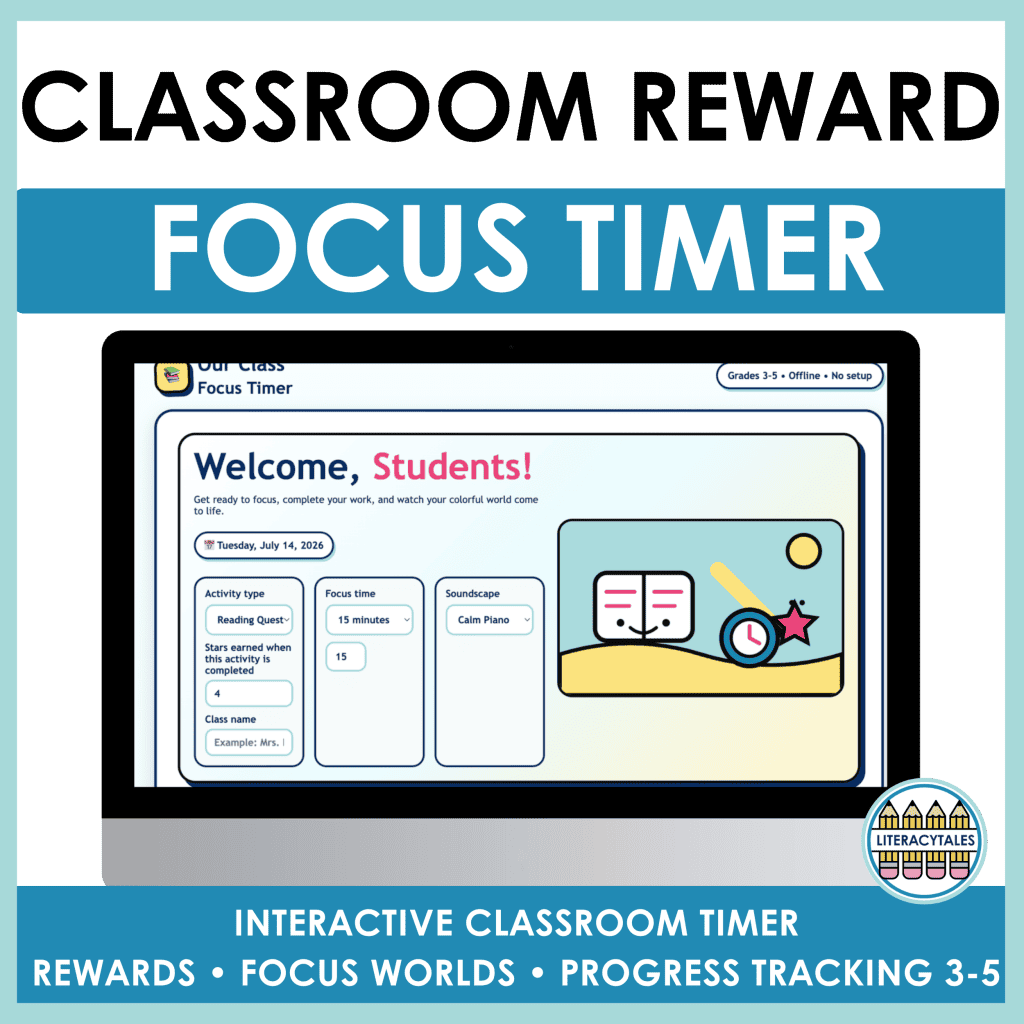
A visual timer helps too. I built the Classroom Reward Focus Timer because I needed my students to work toward positive behavior on their own, so I could focus on incomplete work and small groups instead of managing the clock. Our Classroom Reward Focus Timer is designed for grades 3-5.
Use the first week to get real reading and skill data
The first week is the best time to find out what your students actually know, not what their last report card said. A few low prep ways to do this:
- Reading passages at multiple levels. Give students a low, middle, and advanced fiction or nonfiction passage and see where they land. This gives you a starting point for grouping before you even open your reading data.
- Phonics and language checks. A quick page on long and short vowels, syllables, and compound words tells you fast whether a student needs extra phonics support this year, especially useful in grade 3 and for any student still building foundational skills in grades 4 and 5.
- A short writing sample. One writing prompt that covers basic grammar, punctuation, and sentence structure shows you where each student’s writing starts.
Once you have this data, you’re ready to build your groups. Our small-group guide walks through exactly how to turn day one data into a working rotation.
What’s Inside?
Language Arts:
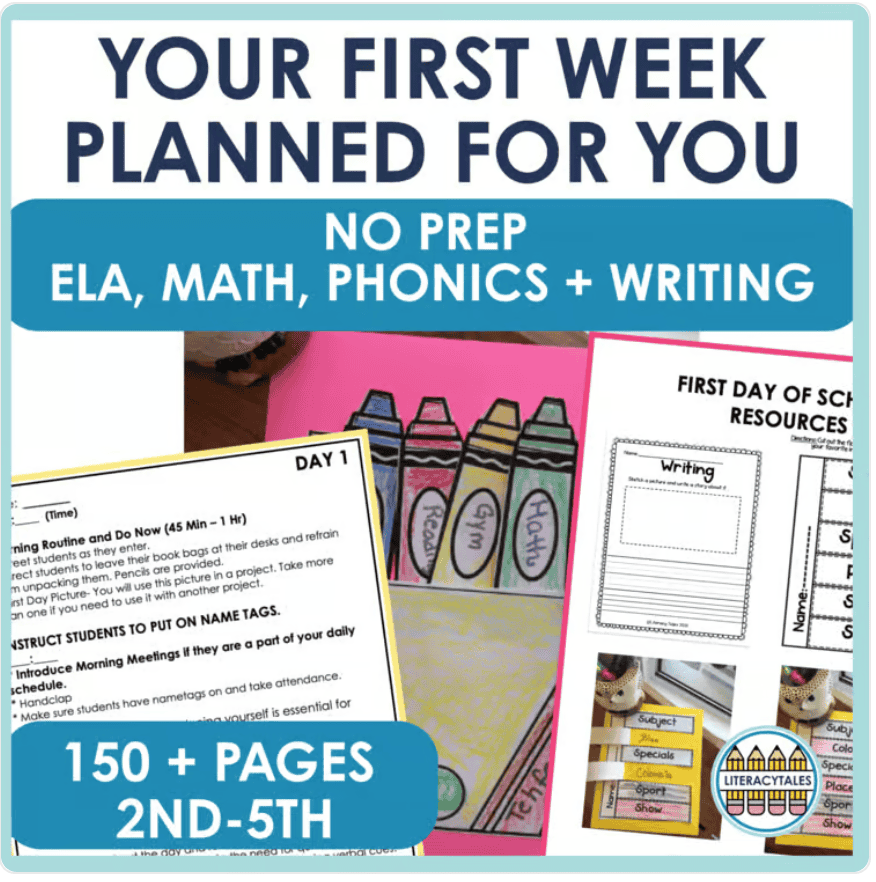
Reading, writing, Grammar, and Phonics are activities for the first week of school.
Phonics:
You will find Phonics pages covering everything from Long/Short Vowels to Syllables, Compound Words, and Vowel Assessments.
These activities help reinforce fundamental language skills, assess your students at the beginning of the school year, and keep the learning process exciting.
By grade
Grade 3: Keep passages shorter and stick to concrete comparisons. A Venn diagram comparing two short stories is an effective early check for critical thinking.
Grade 4: Add passages with more inference required and ask students to explain their answers out loud, not just mark a bubble.
Grade 5: Use longer passages and ask students to synthesize across two texts. This also previews the kind of close reading work they’ll do all year.
Build classroom community from day one
Getting to know your students matters as much as the academic data. A few activities that work well in the first week:
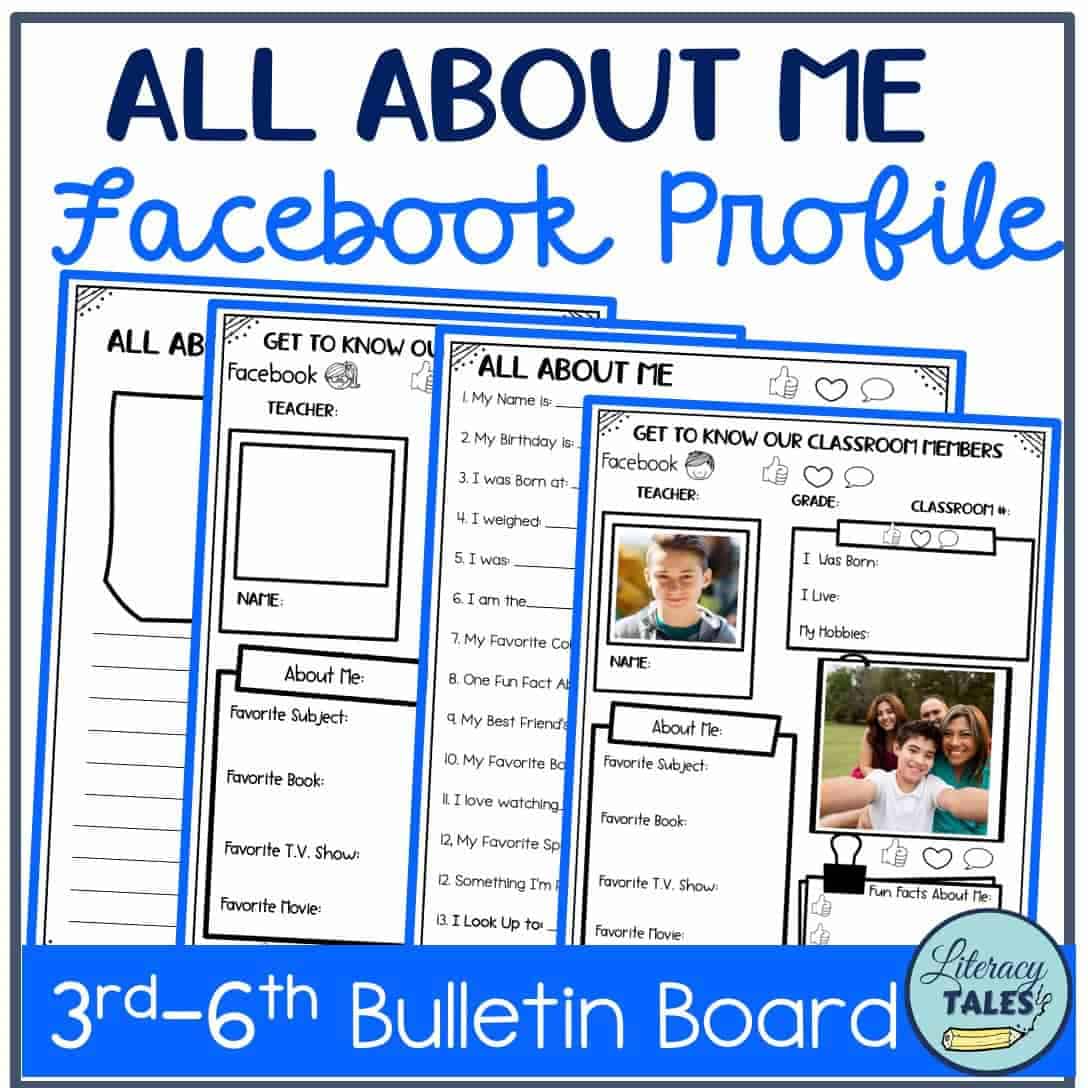
- An “All About Me” style profile activity, styled like a social media profile, gives students a low-pressure way to share their interests.
- A word search or “I Spy” activity keeps early finishers engaged without adding to your grading pile.
- A simple about-me page doubles as a quick writing skills check and a bulletin-board display for back-to-school night.
Why low prep matters more in the first week than in any other week
The first week always takes longer than planned. Fire drills, schedule changes, and new-student paperwork eat into instructional time no matter how ready you are. Building in low-prep, print-and-go activities for reading, phonics, writing, and math means you can adjust on the fly without scrambling to create something new.
That’s exactly what our First Week of School Lesson Plans and Activities bundle is built for. It covers reading passages at three levels, phonics pages, a week of writing prompts, math about me, and bulletin board materials for grades 3 through 5, so the plans above are ready to print rather than build from scratch.
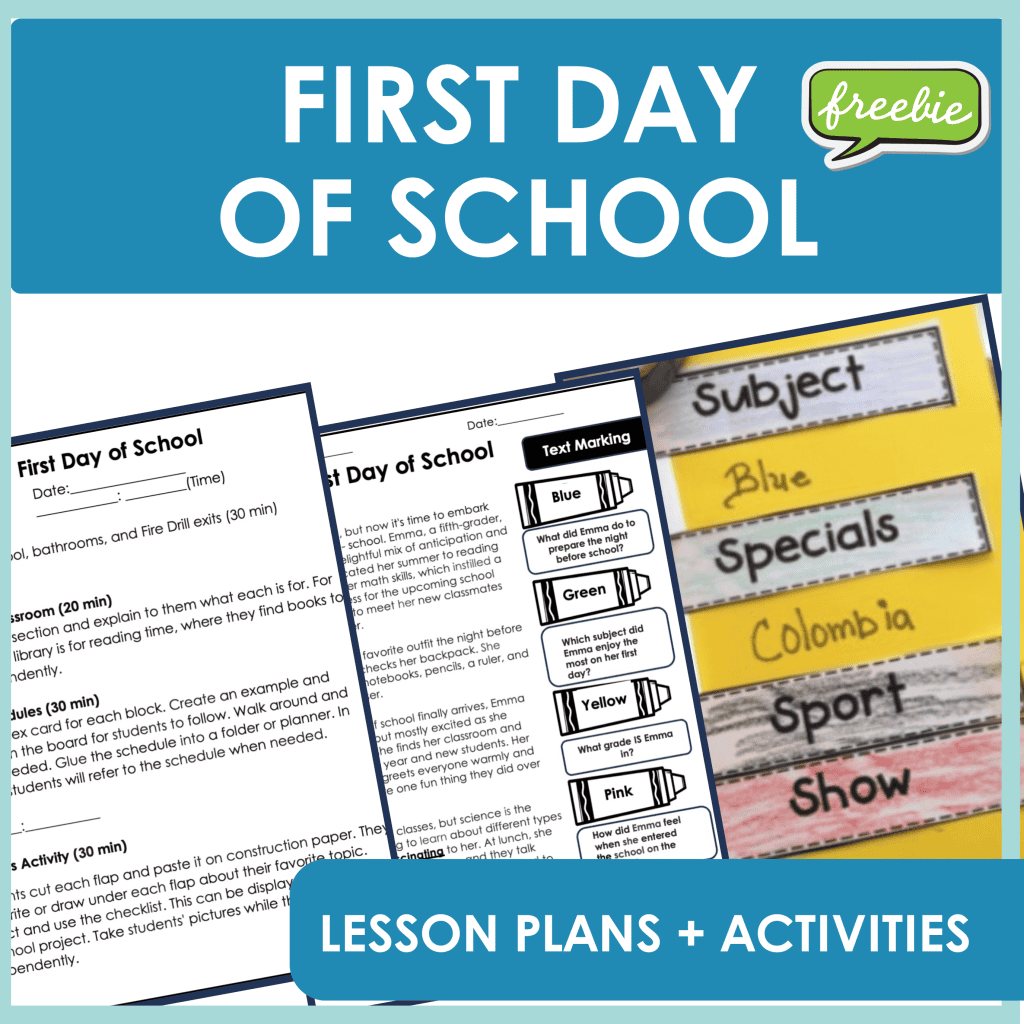
You can also grab the free First Day of School activity if you just want something ready for day one while you plan out the rest of the week.
Bonus included for free to help you build a classroom community with our Facebook Profile Activities:
Ready-to-Go
This resource covers everything from lesson plans to bulletin board decorations. Say goodbye to last-minute preparation and have a well-organized classroom from day one.
Embrace the New School Year!
Welcome your students back with the right activities to get to know them on a personal and academic level and set the stage for a year of growth and learning!
Get ready to print, go, and begin the new school year with confidence.
Your students’ educational journey starts here.
Don’t forget to grab your freebie for the first day of school!
FAQ
What should I do the first week of school? Focus on routines, getting to know your students, and quick reading, writing, and phonics checks that double as get-to-know-you activities. Save full content instruction for week two.
How do I assess students without making the first week feel like testing? Use leveled reading passages, a short writing sample, and a phonics check framed as classroom activities rather than a formal test. Students get a low-pressure entry point, and you still get real data.
How long should the first week of school activities take? Plan for shorter blocks than usual. Between routines, introductions, and interruptions, most teachers cover less content than a typical week, so low-prep, flexible activities matter more here than at any other time of year.
Is this appropriate for grades 3, 4, and 5? Yes, with adjustments. Grade 3 benefits from shorter, more concrete tasks. Grades 4 and 5 can handle longer passages and more independent explanations of their thinking.
Tehfe – Fifth-Grade ELA and Social Studies Teacher
Creator of LiteracyTales
This post may contain affiliate links. All opinions are always 100% mine, and I don’t work with any product or company I don’t use and love.